
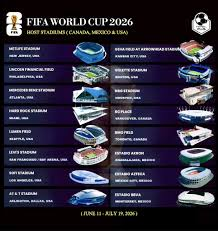
The FIFA World Cup is widely regarded as the most prestigious and widely viewed sporting event on the planet. Organized by FIFA, it brings together the best national football teams from around the world to compete for the ultimate prize in international football. Since its first edition in 1930, the tournament has grown into a global phenomenon that captures the attention of billions of fans every four years. It is not just a football competition; it is a celebration of culture, unity, passion, and sporting excellence.
The World Cup is more than just matches on a field—it is an event that unites nations, creates unforgettable moments, and produces football legends. From historic goals to dramatic finals, the tournament has delivered some of the most iconic scenes in sports history.
1. History of the FIFA World Cup
The idea of a global football competition began in the early 20th century when football was becoming increasingly popular worldwide. The first official FIFA World Cup took place in 1930 in Uruguay. Thirteen teams participated, and Uruguay emerged as the first-ever champion.
Over time, the tournament expanded in size, popularity, and importance. After a brief interruption during World War II, the World Cup resumed in 1950 and has continued uninterrupted ever since. Today, it features 32 teams (and will expand to 48 teams in future editions), representing every continent.
Some key historical milestones include:
- 1930: First World Cup held in Uruguay
- 1958: Pelé emerges as a global star with Brazil
- 1966: England wins its first and only World Cup
- 1970: Brazil wins with one of the greatest teams in history
- 1998: France wins its first title on home soil
- 2010: First World Cup held in Africa (South Africa)
- 2022: Argentina wins a dramatic final against France
Each tournament adds new chapters to football history, making the World Cup a continuously evolving legacy.
2. Format of the Tournament
The FIFA World Cup follows a structured format designed to ensure fair competition and global participation.
Qualification Stage
Before the main tournament, teams from different continents compete in qualification rounds. These are organized by regional football federations such as UEFA (Europe), CONMEBOL (South America), AFC (Asia), CAF (Africa), and others.
Group Stage
Qualified teams are divided into groups, usually consisting of four teams each. Every team plays against the others in its group. The top teams advance to the knockout stage.
Knockout Stage
This is where the competition becomes intense. Matches are single elimination—if a team loses, it is out of the tournament. This stage includes:
- Round of 16
- Quarter-finals
- Semi-finals
- Final
The Final Match
The final is the most watched sporting event in the world. The two best teams compete for the championship trophy.
3. The FIFA World Cup Trophy
The World Cup trophy is one of the most iconic symbols in sports. It is made of 18-carat gold and depicts two human figures holding the Earth. Winning it represents the highest achievement in football.
Unlike many trophies, the original World Cup trophy is not permanently kept by the winning team. Instead, winners receive a gold-plated replica, while the original remains under FIFA’s protection.
4. Legendary Players and Moments
The World Cup has produced countless football legends who have defined generations.
Legendary Players
- Pelé (Brazil): Won three World Cups and became a global icon
- Diego Maradona (Argentina): Known for the “Hand of God” and “Goal of the Century”
- Zinedine Zidane (France): Led France to victory in 1998
- Ronaldo Nazário (Brazil): Top scorer in 2002 World Cup
- Lionel Messi (Argentina): Won the World Cup in 2022
- Cristiano Ronaldo (Portugal): One of the greatest players in modern football
Memorable Moments
- Maracanazo (1950): Uruguay defeated Brazil in Brazil
- England’s 1966 victory at home
- Diego Maradona’s solo goal in 1986
- Zidane’s final header in 1998
- Germany’s 7–1 win over Brazil in 2014
- Argentina vs France final in 2022
These moments are etched in football history forever.
5. Global Impact of the World Cup
The FIFA World Cup is not just a sports event; it has a massive global impact.
Cultural Impact
The tournament brings together different cultures, languages, and traditions. Fans from all over the world travel to host countries, creating a festival-like atmosphere.
Economic Impact
Hosting the World Cup boosts tourism, infrastructure development, and global investment. Countries spend billions preparing stadiums, transport systems, and accommodation.
Social Impact
The World Cup promotes unity and peace by bringing nations together through sport. It encourages young athletes worldwide to pursue football.
6. Modern Era of the FIFA World Cup
In recent years, the World Cup has become even more advanced due to technology and global media coverage.
Technology in Football
- VAR (Video Assistant Referee) ensures fair decisions
- Goal-line technology helps determine goals accurately
- Advanced analytics improve team strategies
Media and Broadcasting
The tournament is broadcast in almost every country, reaching billions of viewers. Social media also plays a huge role in fan engagement.
Expansion of Teams
FIFA plans to expand the tournament to 48 teams, allowing more nations to participate and increasing global representation.
7. Future of the FIFA World Cup
The future of the World Cup looks even more exciting. With technological advancements, improved training methods, and growing global interest, the tournament will continue to evolve.
Upcoming editions are expected to include:
- More teams and matches
- Improved fan experiences
- Eco-friendly stadium designs
- Greater digital engagement
Football is growing rapidly, and the World Cup will remain its biggest stage.
FAQs
1. What is the FIFA World Cup?
The FIFA World Cup is an international football tournament organized by FIFA where national teams compete for the world championship.
2. How often is the World Cup held?
It is held every four years.
3. Which country has won the most World Cups?
Brazil has won the most titles, with five championships.
4. How many teams participate in the World Cup?
Currently, 32 teams participate, but it will expand to 48 in future editions.
5. Who is the greatest World Cup player?
Many consider Pelé and Lionel Messi among the greatest due to their achievements.
6. What is the most famous World Cup moment?
There are many, but Maradona’s 1986 “Goal of the Century” is one of the most iconic.
7. Where was the first World Cup held?
The first World Cup was held in Uruguay in 1930.
Conclusion
The FIFA World Cup stands as the pinnacle of global football and one of the most influential sporting events in human history. Organized by FIFA, it has grown from a small tournament into a worldwide celebration watched by billions.
Its history is filled with unforgettable moments, legendary players, and dramatic matches that have shaped the sport of football. Beyond the game itself, the World Cup promotes unity, cultural exchange, and international friendship.
