
Remove the herbivores from a food web and you don’t get a simpler system—you get a different one. Trophic cascades spread as reorganization events, not neat three-step chains, and primary consumers—herbivores that eat plants or algae, transfer producer energy into animal biomass, and connect producers to predators and competitors—sit at their most consequential junction.
Changes at the herbivore level push cascades downward onto producers by altering grazing pressure and plant recruitment, and upward into predators and competitors by reshaping prey supply. Ecologically, collapse means a disturbance large enough to reorganize who regulates whom and how strongly—not a seasonal fluctuation or a temporary dip. A plant surge alone isn’t proof of a cascade; the diagnostic signature is coordinated change across herbivore pressure and plant structure, followed by later responses in predator diets or abundance. Once regulation reorganizes, those new states can be slow and incomplete to reverse.
Top-Down vs. Bottom-Up Disruptions
The direction a cascade travels matters as much as its intensity. Ecologists call a cascade top-down when predators drive change through herbivores to producers; bottom-up when shifts in producer abundance or quality propagate upward through the web. Primary consumers sit precisely between those two flows, which means a change in herbivore numbers can participate in either—a predator decline releases herbivores to overgraze, while a plant shock starves or concentrates herbivores and ripples upward to predators.
In plant–herbivorous insect systems, a recent synthesis found that top-down regulation by predators was a stronger predictor of ecosystem stability than bottom-up variation in plant resources—placing herbivore pressure at a particularly sensitive control point. When predators or herbivores shift, plant biomass and stability can reorganize even when producer conditions look similar. That doesn’t establish predator dominance as a universal rule, but it does show why tracking the direction of control on primary consumers is where cascade prediction has to start.
Primary Consumer Collapse and Boom
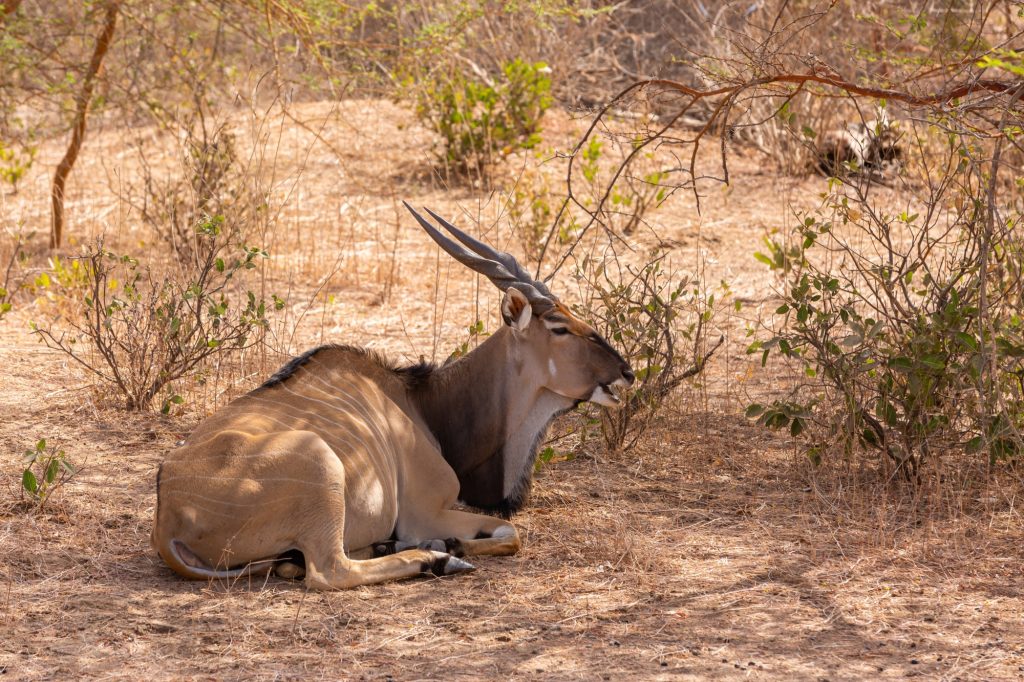
When herbivore populations decline, the first thing that changes is what plants experience. Grazing pressure relaxes, allowing previously cropped vegetation to accumulate biomass, litter, and shade—altering light, soil moisture, and nutrient cycling, and reshuffling which species dominate the competition for space. Predators lose part of their prey base, so some decline, others switch to alternative prey, and others intensify pressure on the herbivores that remain. Energy flow doesn’t simply diminish; it redirects.
Where it redirects depends on what remaining herbivores do. Consider two species feeding on the same producer layer. If Herbivore A declines but Herbivore B is functionally similar and already constrained by predators, disease, or territory, total grazing may change little and plant release stays moderate—a buffering outcome. But if B is freed from competition, or predators shift their attention away from it, B can increase and concentrate feeding on the most palatable plants, accelerating compositional change even though the broader herbivore community looks intact. That two-herbivore contrast is the practical meaning of competitive release: losing one species can either barely change total grazing or shift it sharply, depending on how similar and how constrained the remaining consumers are.
When primary consumers boom rather than collapse, the same relationships run in the opposite direction. Reduced predator control, surplus food, or newly available habitat can push herbivore populations past what the producer layer can sustain, stripping seedlings, blocking forest recovery, or pushing grasslands into simpler, erosion-prone states. A temporarily abundant prey base may also support more predators than the ecosystem can carry long-term, setting up later crashes. The through-line in both directions is the same: track how herbivore pressure shifts, not just whether it’s labeled high or low.
Why Some Cascades Fizzle and Others Roar
Whether a cascade fizzles or roars depends on the architecture of the food web—and the relationship between structure and outcome is rarely intuitive. Highly connected webs give predators, omnivores, and detritivores alternative routes for energy flow, sometimes absorbing a shock before it propagates widely. Redundancy among primary consumers can dampen change too, but only when remaining herbivores are genuinely substitutable and already constrained by other factors. When supposed replacements differ in diet, feeding season, or habitat use—or when predators regulate them differently—herbivore loss can redirect or intensify plant pressure rather than soften it. Functional overlap is not the same as functional equivalence, and confusing the two is one of the more common errors in cascade analysis.
For exams and data-interpretation tasks, these ideas work best as a reasoning path rather than a vocabulary list. Start by identifying which trophic level is directly disturbed, then trace how that alters grazing or browsing pressure on producers. From there, consider how predator and competitor dynamics are likely to adjust. Finally, ask which modifiers—web complexity, herbivore overlap, omnivory, dietary specialization, and time lags—would amplify or weaken the cascade. The difference between a partial answer and a strong one usually comes down to showing those links and their limits explicitly, not just naming the terms.
Real Ecosystems in Action
In kelp forests, the producer layer is the habitat—which makes shifts in herbivore pressure particularly consequential. Field observations and UAV imagery from a temperate kelp forest documented rapid kelp loss where warming, storm disturbance, and intensified grazing together pushed the system toward a low-kelp alternate state. The terrestrial version of the same dynamic plays out differently but follows comparable logic. In a long-term African savanna exclosure that removed large herbivores, tree cover increased through shifts in tree growth and demography—a direct expression of the producer-layer release expected when browsing is removed. When herbivores were reintroduced, vegetation structure and recruitment adjusted only gradually. The cascade ran considerably faster in one direction than the other.
Freshwater lakes offer the same logic at a compressed scale. Herbivorous zooplankton graze phytoplankton; when zooplankton decline, algal biomass rises, water clarity falls, and oxygen levels can drop. Higher grazing can clear the water until producers become limiting and the pressure inverts. Across all three systems—kelp forest, savanna, lake—the pattern is suggestive: producer-layer changes lead, predator responses lag, and these examples indicate that restoring herbivore numbers may not guarantee a return to a prior state. Once an alternate configuration emerges, it can persist even when conditions shift back. That’s the part the simplified cascade diagram usually leaves out.
Trophic Cascades in Management and Conservation
Every practical debate in conservation—rewilding decisions, hunting quotas, invasive-species control—eventually returns to the same question: what happens to herbivore pressure, and what does that pressure regulate? Understanding how energy moves through primary consumers into producers and predators doesn’t just answer a textbook definition question. It provides a working model for predicting which direction a system will tip, how far, and how hard it will be to bring back. The cascade diagram makes it look easy. The reasoning behind it—tracking direction, lag, and the reorganization of regulatory relationships—is how ecologists anticipate change rather than simply describe it after the fact.
